Old ways of keeping good water
Storing water is easy. Keeping it good — clear, cool and free of anything growing in it — is the part people got wrong for most of history, and the part that still gets people sick.
The whole trick, in one line: water spoils at the surface and in the light. Every old method below does one of two things — it keeps air off the water, or it keeps the water cool. The good ones do both.
1. The buried olla
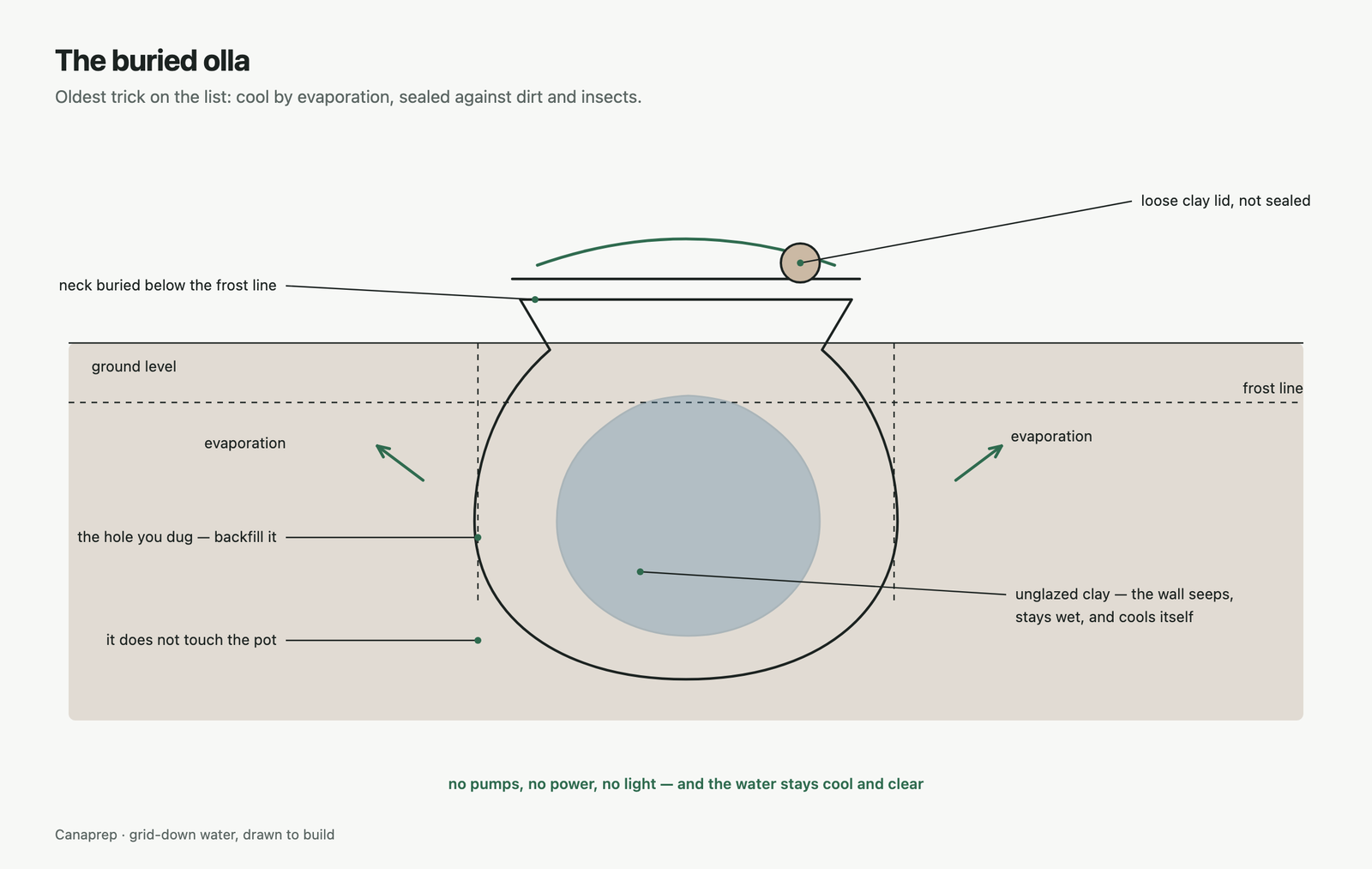
Unglazed clay sweats. Water passes slowly through the wall, evaporates off the outside, and takes heat with it — which is why the water inside a buried olla is noticeably colder than the air. Bury it to the neck so the neck sits below the frost line, backfill the hole without pressing against the pot, and rest a loose lid on it. Loose matters: a sealed lid traps nothing useful and makes the pot awkward to open.
What it will not do: it does not purify anything. It keeps water that was already good from going warm and stale.
2. The zeer pot
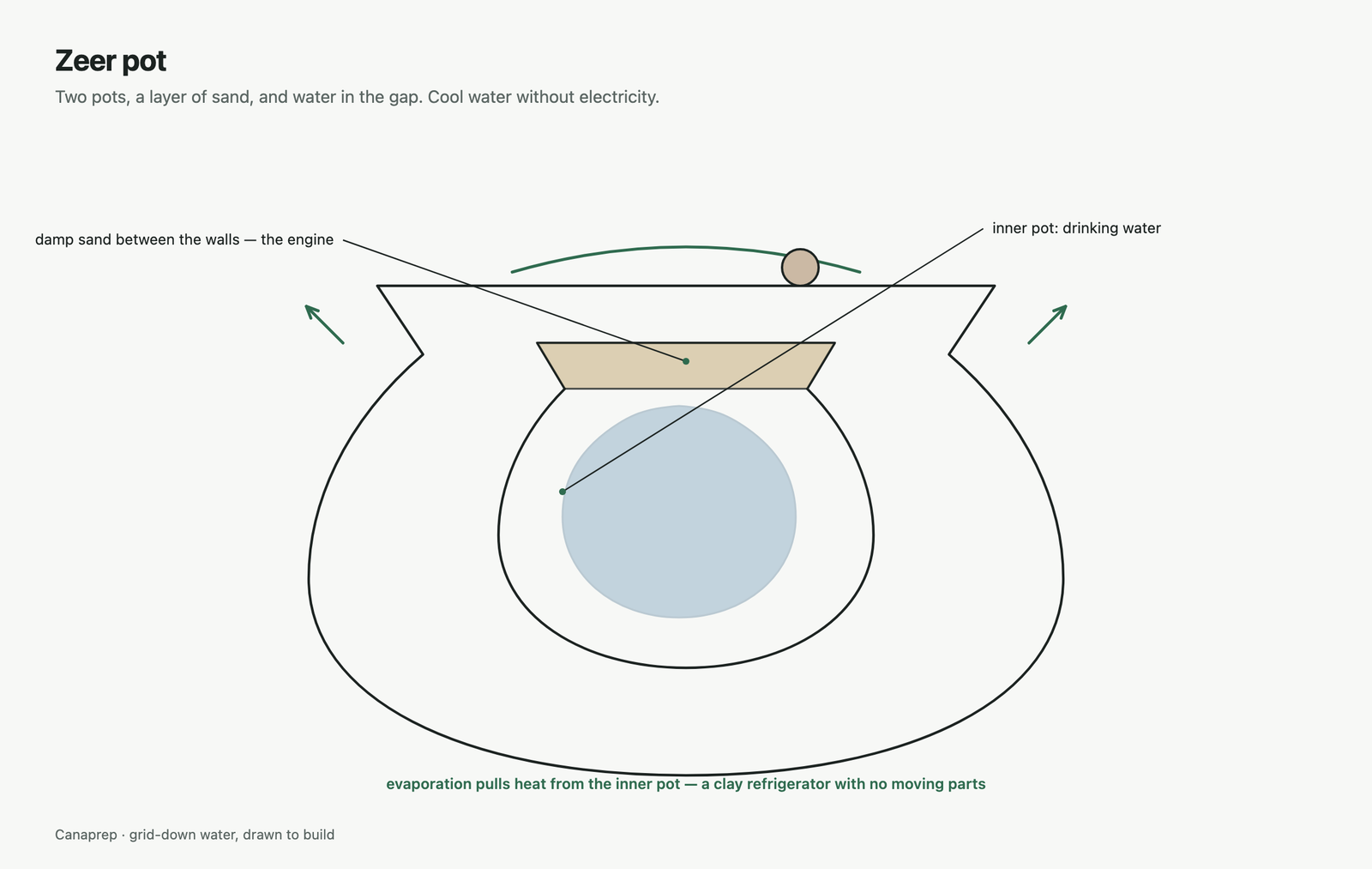
Nest a small pot inside a larger one and fill the gap with sand. Soak the sand, keep the outer pot out of direct sun, and keep it damp. Evaporation from the outer surface pulls heat out of the inner pot, and the inner pot gives you water that is genuinely cool without a single moving part. Re-wet the sand daily; this is the whole maintenance schedule.
3. Cistern with first flush
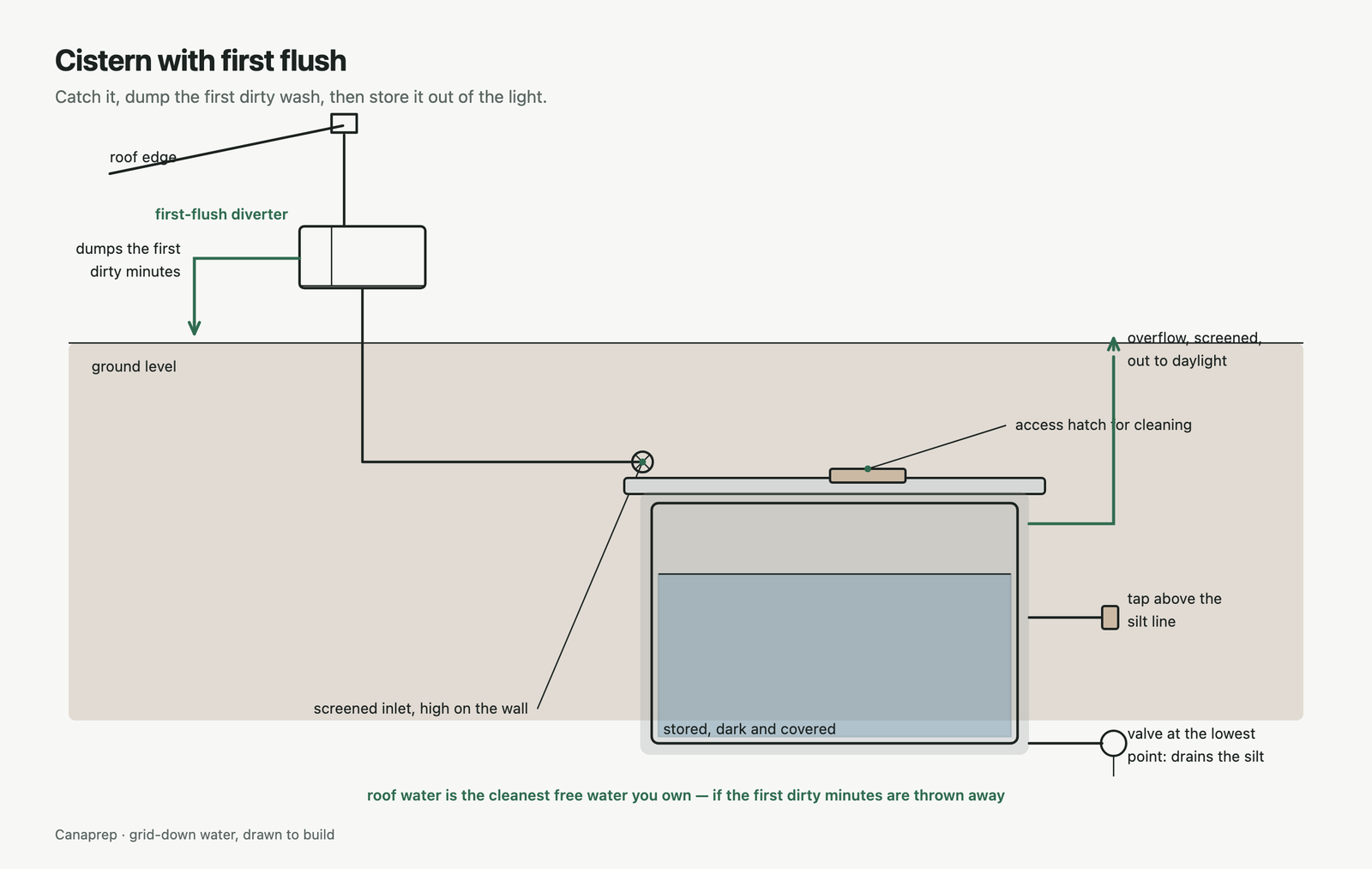
Roof water is the cleanest free water on your property — the roof is a big collection surface and rain arrives distilled. The catch is that the first minutes wash the roof clean, and that wash is the dirtiest water you will collect all year. A first-flush diverter throws that away before it reaches the tank.
| Part | Why it is there |
|---|---|
| First-flush diverter | Dumps the first dirty wash instead of storing it |
| Screened inlet, high on the wall | Silt settles below the draw-off point |
| Overflow to daylight | Full tank must have somewhere to go, and you need to see it running |
| Tap above the silt line | You draw clean water, not the layer on the bottom |
| Valve at the lowest point | The only way to get the silt out |
Store it dark and covered. Light grows things; a lid stops leaves, insects and small animals from becoming part of your water supply.
4. The layered filter
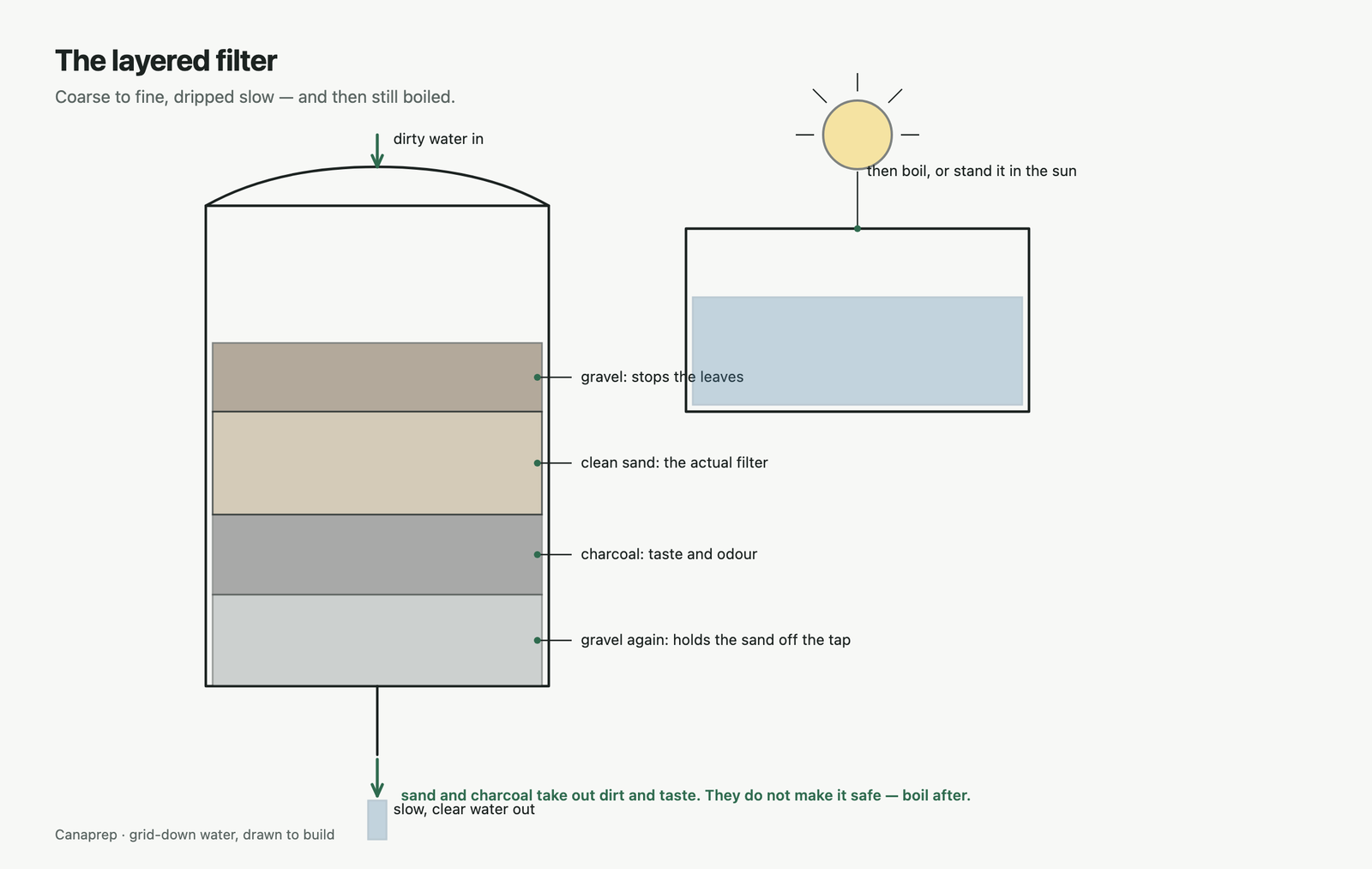
Gravel, then clean sand, then charcoal, then gravel again to hold the sand off the tap. Drip it slowly — a fast filter is a filter that is not filtering. The sand does the actual work; the charcoal takes out taste and odour.
Read this twice: this filter removes dirt, cloudiness and taste. It does not make questionable water safe. Boil it afterwards, or stand it in clear sunlight in a clear bottle, and only then drink it.
5. The icehouse
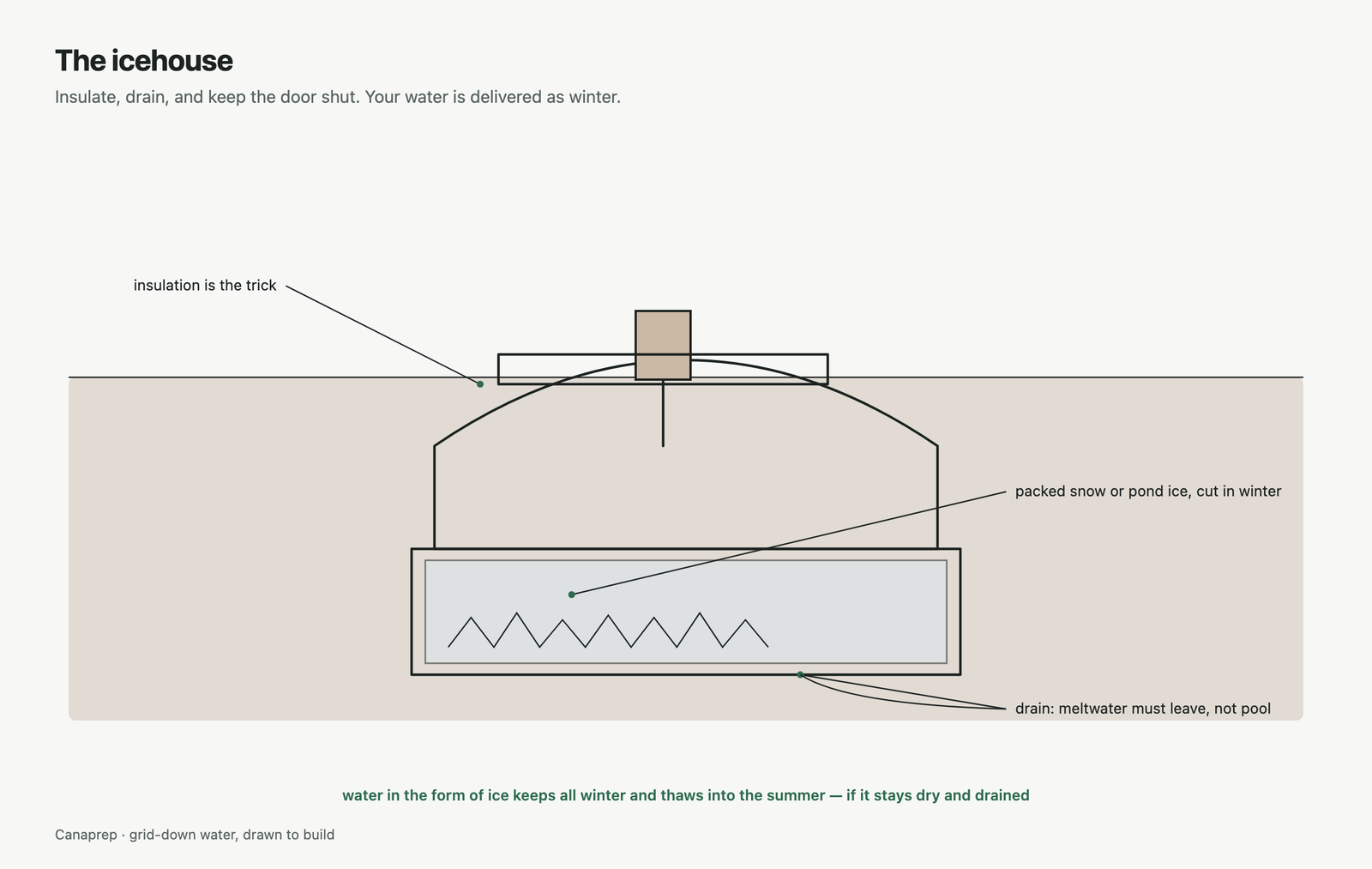
Before refrigeration, ice cut from ponds and packed in straw or sawdust lasted the summer. The insulation is the entire trick, and the drain is the second half of it — meltwater that pools will rot the ice from the bottom. If you have the space and a Canadian winter, this is free water in its most durable form, and it will keep food cold at the same time.
6. Oil-sealed jar
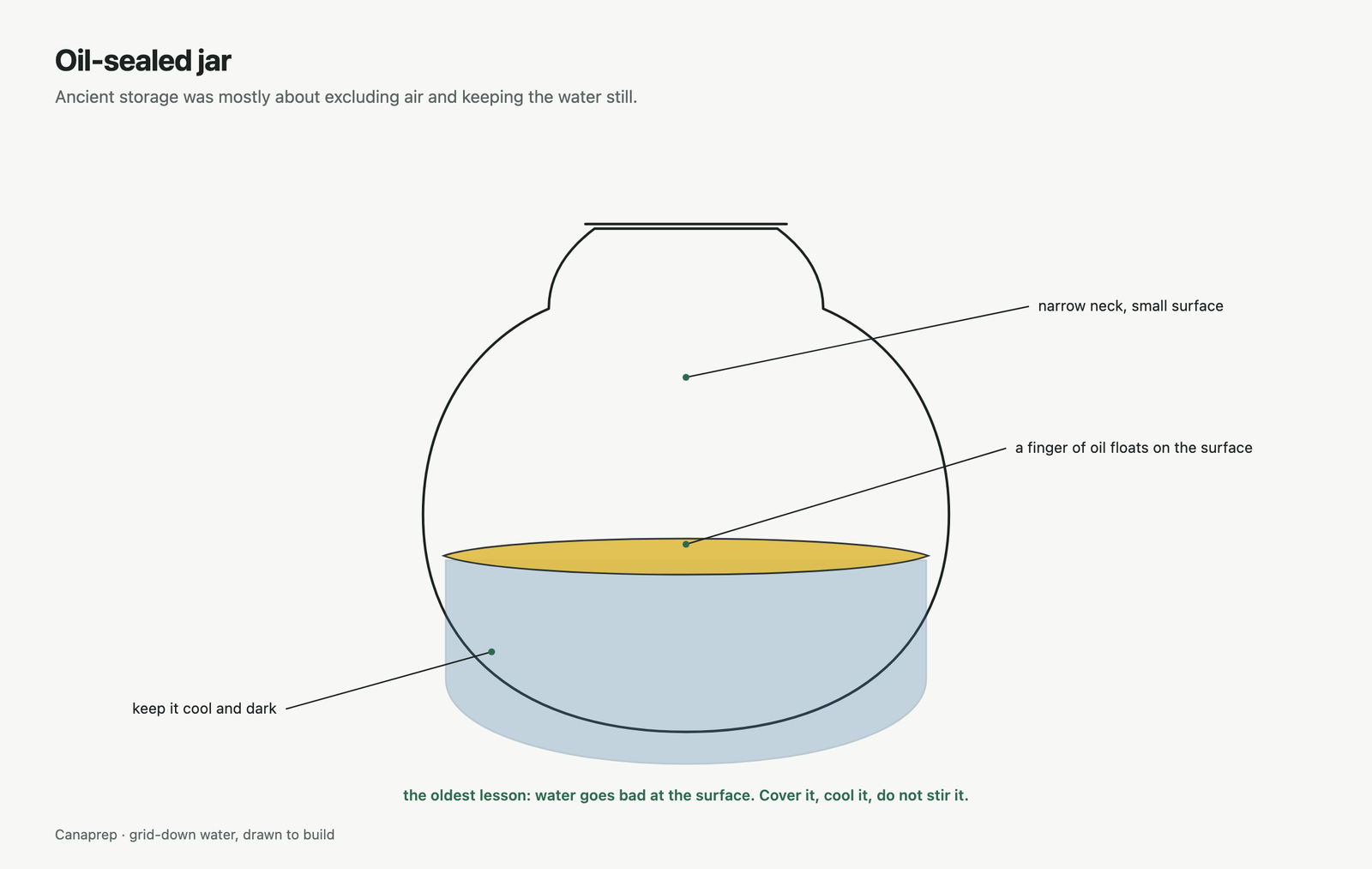
Water spoils at the surface, where air and light do their work. Pour a thin layer of food-grade oil on top and it floats, sealing the water off from air. Combine that with a narrow neck — small surface area — and a cool dark corner, and water that was clean will stay clean for months. Olive oil was the historic choice; any food-grade oil that floats and does not go rancid quickly will do.
Do not stir it. Every time you break that surface you start the clock again.
7. Barrel, silver and cloth
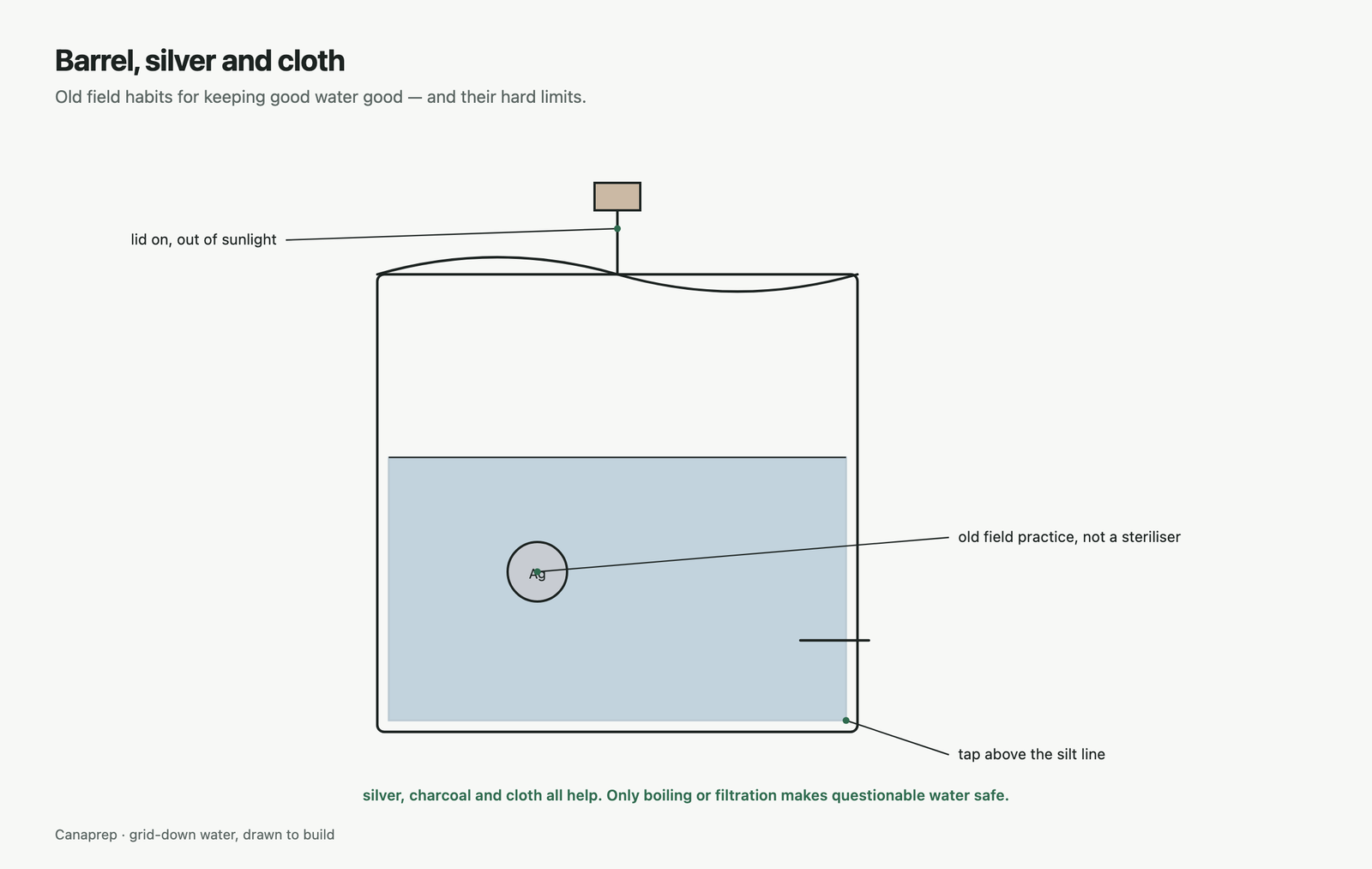
Silver coins dropped in a barrel, charcoal, a cloth tied over the mouth, a tap set above the silt line — these are all real practices, and all of them help. They are also all often oversold. Silver slows growth; it does not sterilise a barrel. Charcoal improves taste; it does not kill anything.
The hard limit: if you are unsure about a water source, boiling and filtration are the tools that make it safe. Everything on this page is about keeping water that is already good.