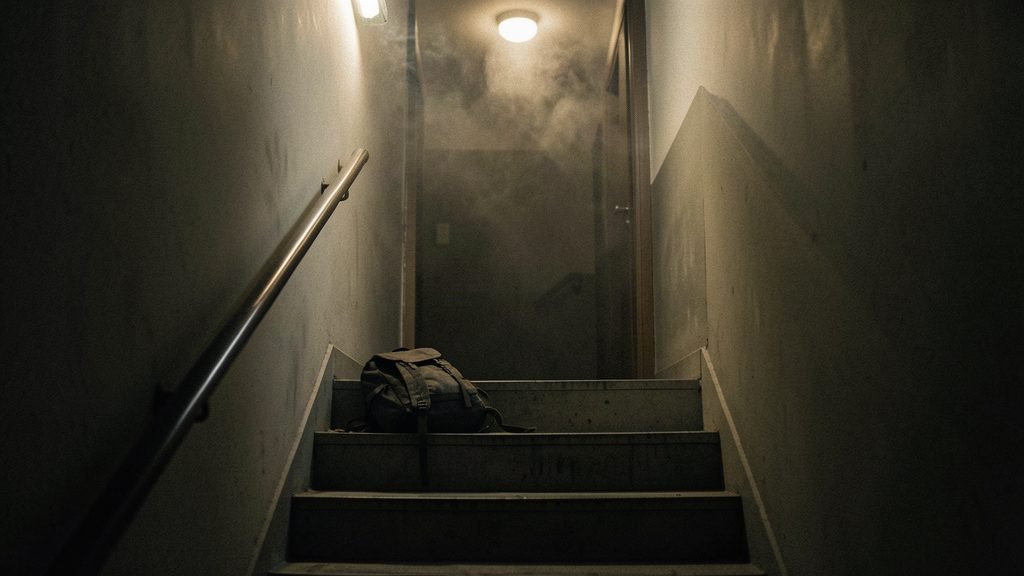
The six minutes that kill you
In a disaster, most people do not panic. They wait. The average survivor of the World Trade Center attacks waited around six minutes before heading down the stairs — and that delay is what the training is for.
Amanda Ripley's The Unthinkable is the book to read if you only read one thing about disaster behaviour, because its finding is counter-intuitive and uncomfortable: the failure mode is rarely panic. It is under-reaction.
Drawing on around nine hundred interviews with survivors of the World Trade Center attacks, Ripley reports that people waited, on average, roughly six minutes before they began to leave — with alarms sounding and a building visibly on fire. Six minutes is not indecision. It is a full evacuation window spent standing still.
Why you will do it too
Two forces are at work and both are normal.
Normalcy bias. The brain pattern-matches new information against experience, and for almost everyone the pattern is "fires happen to other people". So the first interpretation of an emergency is that it probably is not one.
The milling ritual. Even with alarms going, people instinctively check with the people around them before acting. Ripley describes this as part of the deliberation phase, and notes it can take a painfully long time to complete. Everyone is waiting for a cue from everyone else, and nobody gives one.
There is a third behaviour that is worth knowing about in advance because it is so common: among survivors of the 9/11 attacks, about 40 percent gathered belongings before leaving. One described walking in circles, "like I was in a trance", collecting things. Knowing that you are likely to feel that pull is what lets you override it.
What that means in practice
The countermeasures are unglamorous and they work:
- Treat an ambiguous signal as real and start moving. If it turns out to be nothing, you have lost a few minutes. The asymmetry is the whole point.
- Skip the milling ritual. Do not stand around asking other people what is happening. Pick your exit and go; you can ask questions on the way out.
- Leave the bag. Evacuate first, gather nothing.
- Assume no professional rescue for hours. In large disasters the first responders are ordinary people already on the scene; organised teams often arrive after the survivable window has closed.
- Count two exits and the rows or doors between you and them every time you sit down somewhere unfamiliar. Pre-loaded spatial information is what allows your brain to act when smoke or darkness removes the visual cues.
The part that is not about you
Ripley's largest conclusion is social rather than individual: the health of a community after a disaster tracks the health of that community before it, sometimes more strongly than the disaster itself does. The people who pull each other out are neighbours and strangers who already knew each other.
Which makes "meet the people on your street" a preparedness measure with a better return than most of what you can buy.
Do this this week
- Next time you enter a hall, a plane or a hotel, locate two exits and count the rows to each.
- Decide now, out loud, what your trigger is — the point at which you stop assessing and start moving.
- Introduce yourself to two neighbours you do not know.
The Winter Grid-Down Playbook covers heat, water, food, sanitation, power, medical, comms, security and recovery — in threat order, with the numbers. 43 pages, $27 CAD.
See the kits →